


Blog
Storing and Reconstituting Research Peptides: Laboratory Best Practices

Research peptides are sensitive molecules. Proper storage and careful reconstitution help preserve their integrity so that your research reflects the material’s true properties. The notes below describe general laboratory best practices for handling research-grade peptides.
Storing lyophilized peptides
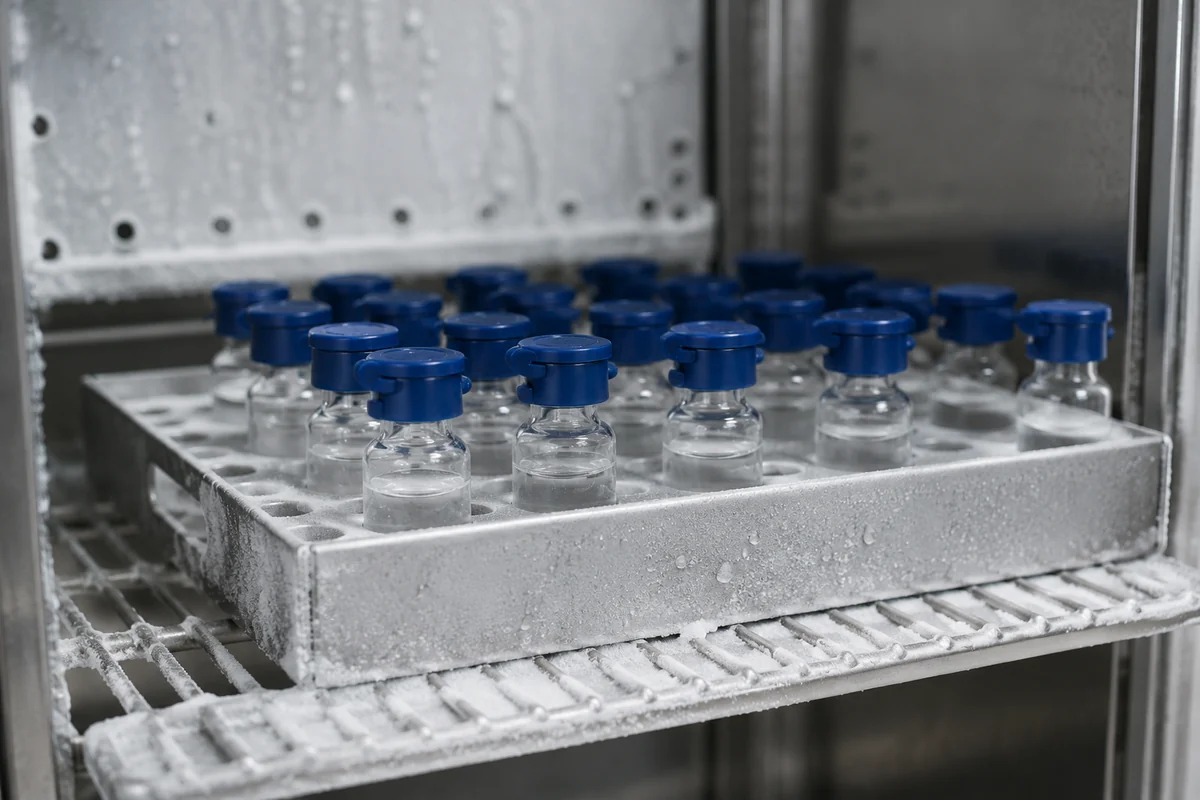
Most research peptides ship as a lyophilized (freeze-dried) powder, which is the most stable form for transport and storage. As a general rule, lyophilized peptides are kept cold, dry, and away from light. Many laboratories store unopened lyophilized material frozen for longer-term storage and minimize temperature cycling by keeping vials in a consistent location.
Reconstitution basics
Reconstitution is the process of dissolving the lyophilized powder in a suitable solvent for laboratory work. General good practice includes:
- Allowing a refrigerated or frozen vial to reach room temperature before opening, to reduce condensation.
- Adding solvent slowly down the inside wall of the vial rather than directly onto the powder.
- Swirling gently to dissolve — avoiding vigorous shaking, which can stress the molecule.
- Using appropriate sterile technique and labware throughout.
After reconstitution
Once in solution, peptides are generally less stable than in their lyophilized form, so reconstituted material is typically kept cold and used within a defined window. Aliquoting can help avoid repeated freeze-thaw cycles, which are a common cause of degradation.
Labeling and records
Clear labeling — compound, concentration, solvent, and date — keeps a lab organized and supports reproducible research. Pairing each vial with its batch COA completes the documentation trail.
GetAll Peptides ships research material in protective packaging for safe transit. Browse our single vials or 10-vial bundles for your next study.
